
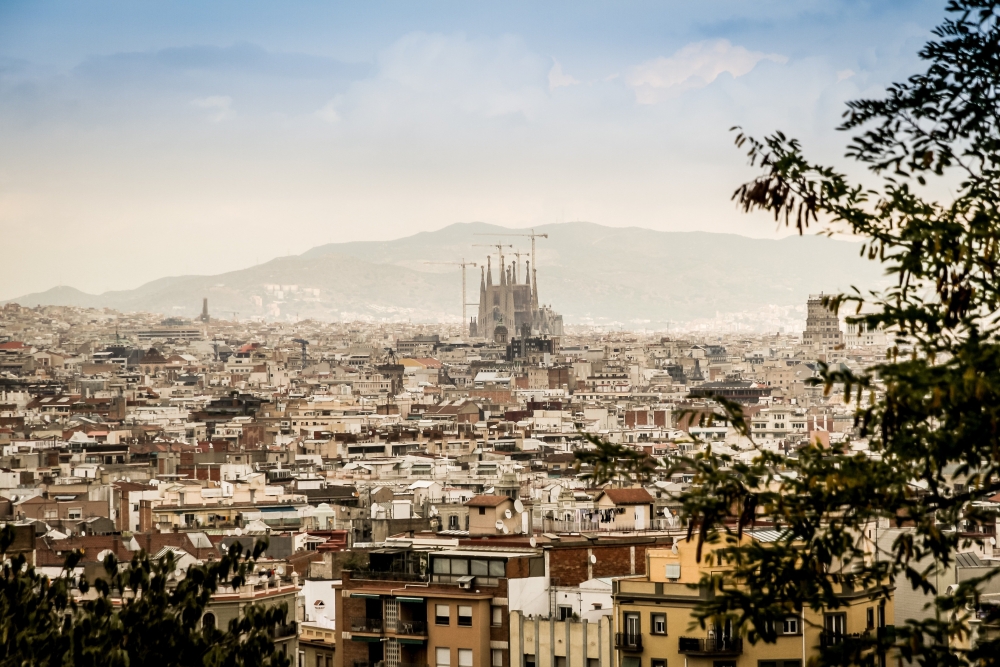
Barcelona overwhelms first-time visitors precisely because it doesn’t have one obvious center — Gaudí’s unfinished basilica sits miles from the medieval Gothic Quarter, which sits miles from the beach, and trying to walk between all three in one day wastes half your trip in transit. Barcelona sightseeing works best when you group attractions by neighborhood and by booking requirements, since several of the city’s biggest draws — the Sagrada Família chief among them — now sell out days or weeks in advance. What follows covers the essential sights, current 2026 ticket realities, and how to sequence multiple days without wasting time on transport.
Sagrada Família: book weeks ahead in 2026
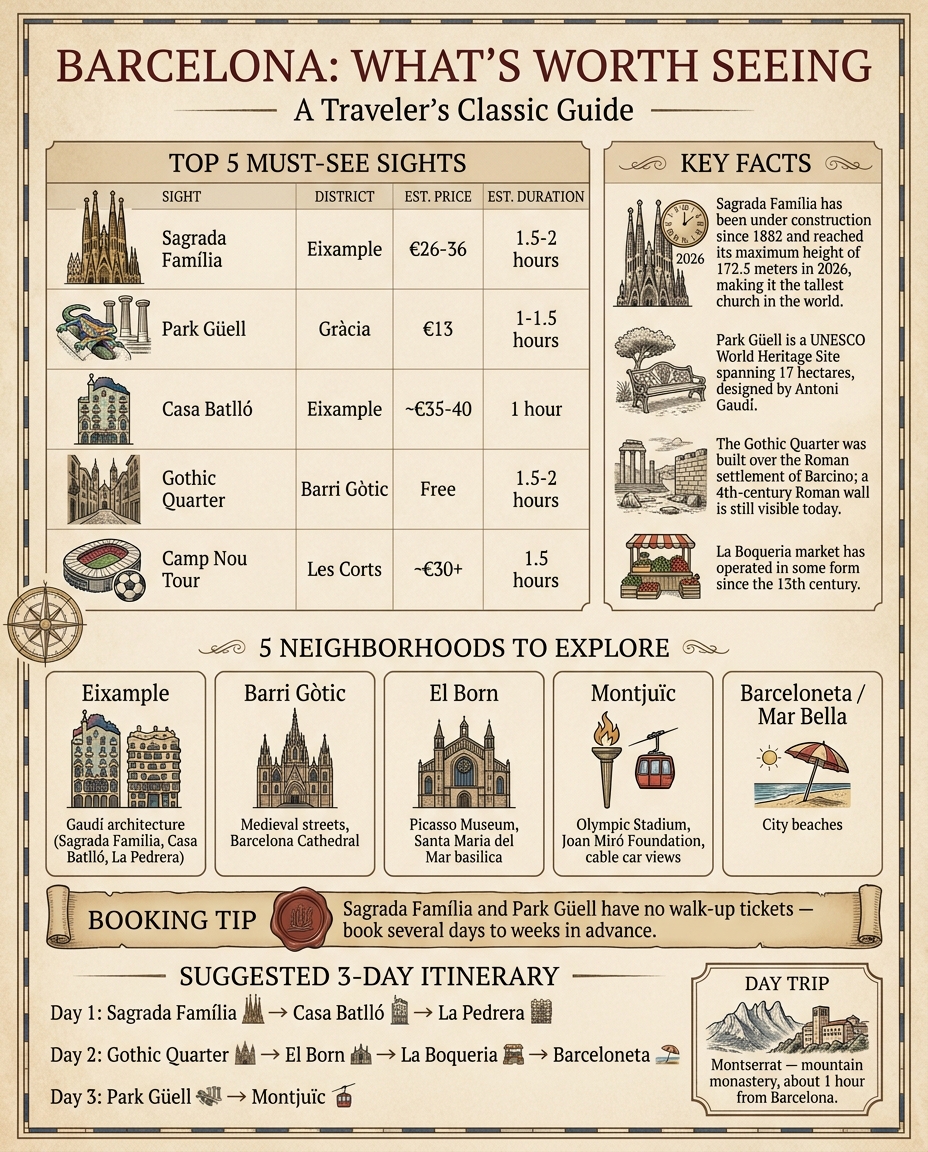
Antoni Gaudí’s unfinished basilica reached a milestone in 2026, hitting its maximum height of 172.5 meters and becoming, upon completion, the tallest church in the world — a fact drawing record crowds during what’s being called the Gaudí centenary year. A standard ticket with audio guide runs €26, while tower access (an elevator ride up one of the towers with a walk down) costs €36. Winter hours run 9:00 AM to 6:00 PM (Sundays from 10:30 AM due to morning mass), extending later into the evening in summer.
2026 brought stricter entry rules worth knowing before you go: all tickets are now nominative, meaning the name on the ticket must match a photo ID checked at the door, there’s no physical ticket office on site, and arrivals are held to a strict 15-minute window with no refunds for latecomers. With visitor numbers projected around 7 million for the year, the walk-up era is genuinely over — book at least several days ahead, and weeks ahead for May through July.
Construction on the Sagrada Família began in 1882 and, even now reaching its final height in 2026, the building has been under continuous construction for 144 years — funded entirely through ticket sales and private donations, with no government money involved.
Park Güell: Gaudí’s hillside fantasy
Park Güell sits on Carmel Hill in the Gràcia district, a UNESCO World Heritage Site spread across 17 hectares of terraces, mosaic benches, and organic stonework that Gaudí designed to blend into the landscape rather than dominate it. The Monumental Zone — the mosaic terrace and famous dragon fountain everyone recognizes from photos — costs €13 for advance-booked entry in 2026, while the surrounding forest zone remains free and open year-round. Like the Sagrada Família, walk-up tickets no longer exist; every entry requires a timed 30-minute slot booked online in advance.
Opening hours run 9:30 AM to 7:30 PM from April through October and 9:30 AM to 5:30 PM the rest of the year. The nearest metro stop, Lesseps or Vallcarca on the green L3 line, still leaves a genuine uphill walk to the entrance — an escalator system from the Vallcarca side helps offset the climb, worth using if mobility or stamina is a concern.
Casa Batlló and La Pedrera: Gaudí on Passeig de Gràcia
Two more Gaudí buildings sit within a five-minute walk of each other on Passeig de Gràcia, making them easy to pair in a single afternoon. Casa Batlló, with its skeletal balconies and scale-like roof tiles evoking a dragon, and La Pedrera (Casa Milà), known for its undulating stone facade and rooftop chimneys that inspired the Star Wars stormtrooper helmet designers, both offer interior tours running roughly an hour. Both buildings get significantly less crowded right at opening or in the final two hours before closing.
Barri Gòtic and El Born: the medieval core
The Gothic Quarter (Barri Gòtic) is Barcelona’s oldest district, a maze of narrow medieval streets built over the original Roman settlement of Barcino — sections of the 4th-century Roman wall are still visible near Plaça Nova. At its center, the Barcelona Cathedral (free to visit the exterior, with paid access to the roof and cloister) anchors a neighborhood best explored without a fixed route; getting deliberately lost here for an hour is more rewarding than following a checklist.
Just east, the El Born district mixes narrower medieval streets with a livelier, more contemporary feel — boutique shops and tapas bars line Carrer del Rec, and the Basílica de Santa Maria del Mar, a 14th-century Catalan Gothic church, offers a quieter, free alternative to the cathedral’s crowds. The Picasso Museum, housed across several converted medieval palaces on Carrer Montcada, focuses heavily on the artist’s early, formative years in Barcelona rather than his later Cubist period.
La Boqueria and the market experience
Just off La Rambla, Mercat de la Boqueria has operated as a public food market since the 13th century in some form, formalized into its current iron-and-glass structure in the 1840s. It’s worth visiting for the sensory overload of the stalls alone, but go before 10 AM or after 5 PM to avoid the worst of the tour-group crush — midday hours can feel more like a photo queue than a market.
Camp Nou: FC Barcelona’s stadium
The Spotify Camp Nou tour gives self-guided access to the stadium, museum, players’ tunnel, and dugout, running around 90 minutes at your own pace. Note that the stadium has been under phased renovation, so it’s worth checking current construction status and which sections are open before booking, since access has varied through the rebuild rather than offering the full traditional tour experience every visitor expects.
Comparing the major sights
| Attraction | Area | Entry (2026) | Booking window needed |
|---|---|---|---|
| Sagrada Família | Eixample | €26-36 | Several days; weeks in summer |
| Park Güell (Monumental Zone) | Gràcia | €13 | A few days ahead |
| Casa Batlló | Eixample | ~€35-40 | 1-2 days ahead |
| Barcelona Cathedral (exterior) | Barri Gòtic | Free | Walk-up |
| Picasso Museum | El Born | ~€12-14 | A few days ahead |
| Camp Nou tour | Les Corts | ~€30+ | Check construction status first |
Montjuïc and the beaches
Montjuïc, the hill overlooking the harbor, packs in the Olympic Stadium from the 1992 Games, the Joan Miró Foundation, and the Montjuïc Castle, reachable by cable car (Telefèric de Montjuïc) for sweeping views over the port and city. The Magic Fountain at its base runs choreographed light and water shows on select evenings, free to watch and one of the better low-cost evening activities in the city.
For beach time, Barceloneta is the closest and most crowded option, a former fishing quarter now lined with seafood restaurants a short walk from the Gothic Quarter. Quieter alternatives — Bogatell and Mar Bella further northeast — see a fraction of the crowds while staying accessible by metro, and Mar Bella in particular attracts a younger, more local crowd than the tourist-heavy Barceloneta strip.
Day trips worth the extra time
Montserrat, the jagged mountain monastery an hour from Barcelona by train and cable car or rack railway, is the most popular day trip, combining dramatic rock formations with a working Benedictine abbey that houses the Black Madonna, a venerated medieval statue. Full-day tours typically bundle transfers, the mountain ride, and abbey access into a single ticket, which is usually more convenient than assembling train and cable car legs separately unless you’re comfortable navigating Spanish rail schedules.
How to plan the days
Three full days covers Barcelona’s essentials without rushing: day one for the Eixample Gaudí sites (Sagrada Família in the morning before crowds peak, Casa Batlló and La Pedrera in the afternoon); day two for the Gothic Quarter, El Born, and La Boqueria, finishing at Barceloneta for dinner; day three for Park Güell in the morning and Montjuïc in the afternoon. A fourth day makes room for Montserrat or Camp Nou without cutting into the core itinerary. Barcelona’s metro is efficient and cheap — a T-Casual 10-trip ticket is generally better value than single fares if you’re moving around multiple times a day, and most of the sights above sit within a 10-15 minute walk of a metro stop.
Frequently Asked Questions
How many days do you need to see Barcelona properly?
Three days cover the essential sights without rushing; four days lets you add a Montserrat day trip or a more relaxed pace around the beaches and Montjuïc.
Do you need to book Sagrada Família tickets in advance in 2026?
Yes, essentially always — there’s no on-site ticket office, tickets are tied to your ID, and popular months like May through July can sell out weeks ahead due to record demand tied to the basilica’s 2026 completion milestone.
Is Park Güell worth visiting if you’ve already seen Sagrada Família?
Yes — the Monumental Zone shows a completely different side of Gaudí’s work, focused on organic, landscape-integrated design rather than religious architecture, and the hillside views over Barcelona are unique to the site.
What’s the best neighborhood to explore without a fixed itinerary?
The Gothic Quarter (Barri Gòtic) rewards aimless wandering more than any other district, with medieval streets, hidden squares, and Roman wall fragments discoverable without needing to follow a set route.
Which beach in Barcelona is less crowded than Barceloneta?
Bogatell and Mar Bella, both a bit further northeast along the coast, see significantly fewer tourists than Barceloneta while remaining easily reachable by metro.
source: https://zwiedz.pl/